
November 16, 2026
McKenzie Jackson | California Black Media
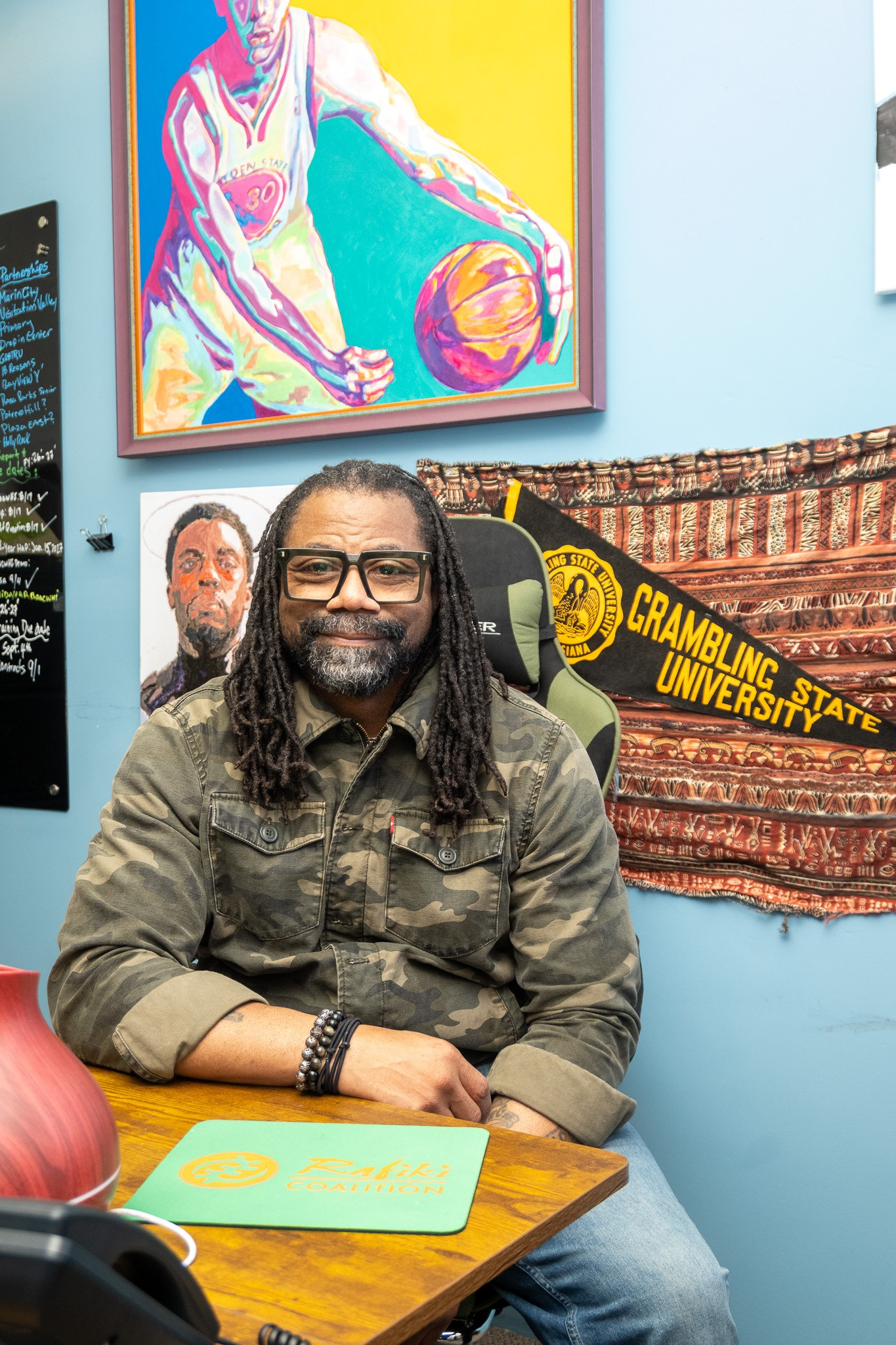
Andre Aikins, 55, serves as director of programs at the San Francisco-based Rafiki Coalition for Health and Wellness, an organization dedicated to improving health outcomes in the Black community.
For Aikins, that work is personal.
His father and older brother died from preventable illnesses in their late 50s, he said. So, when Aikins learned he had high blood pressure and borderline diabetes, the diagnosis came as a shock — especially since he took pride in his healthy and active lifestyle.
“For a while, I refused to believe it and tried to deal with it my own way,” recalled Aikins, a former math teacher and assistant principal. “After going to the doctor a couple of times, I was told it wasn’t getting better, so I had to take prescription drugs, and I had to eat differently.”
Those changes paid off, said Aikins.
“Blood pressure? Perfect. All my health indicators, including blood glucose, are below the range for diabetes.”
But for some Black Californians, taking medication and adopting healthier habits aren’t enough. Getting the right medical care can be just as critical.

Chris Goodloe of the Inland Empire credits his breakthrough to finding a physician who listened
Frustrated with what he perceived as inadequate care at his local Kaiser Permanente facility, Goodloe sought help from a Black female doctor in Murrieta after experiencing a panic attack.
That decision, he said, made all the difference.
The doctor referred him to a specialist who prescribed a diuretic to help control his blood pressure. Goodloe credits that breakthrough to finding a physician who listened.
“I hate to make this about race, but if I hadn’t seen the Black lady in Murrieta I would have never gotten to a specialist,” he said.
Goodloe’s experience underscores how access to attentive, effective medical care can shape health outcomes, particularly for Black patients navigating a health care system in which disparities persist.
Those disparities are especially troubling when it comes to cardiovascular disease, a leading cause of death among Black Californians.
According to the 2026 California State of Public Health Report, Black Californians have the highest reported stroke prevalence, and their cardiovascular disease death rate is 1.6 times the statewide average. Additionally, 2023 Centers for Disease Control and Prevention survey data show that Black Californians had the highest prevalence of hypertension among racial and ethnic groups in the state.
Dr. Powell Jose, a Northern California-based Sutter Health cardiologist and heart disease researcher, said high rates of hypertension remain a significant challenge in the Black community. A Sutter Health study found that Black patients under 50 had the highest rates of heart disease, stroke and heart failure compared with other groups, he said.
“When we dug into why that was the case, it was mostly related to traditional risk factors not being well controlled,” Jose explained.
Experts say those findings are particularly concerning because hypertension is a major contributor to cardiovascular disease. Left untreated, high blood pressure damages blood vessels over time, significantly increasing the risk of stroke, heart attack and heart failure.
Dr. Alexis Simpkins, a vascular neurologist at Cedars-Sinai Medical Center in Los Angeles who specializes in stroke care and cerebrovascular disease, said many people don’t know they have hypertension because they aren’t routinely screened.
“Hypertension is often called the ‘silent killer,’” she said. “High blood pressure is the number one preventable risk factor for heart disease and stroke. Hypertension is treatable. The goal is detecting it and managing it before a serious event happens.”
Aikens Aikins pointed to diet, lack of exercise and mental well-being as factors contributing to the disproportionate burden of cardiovascular disease among Black Californians. He also said reluctance to seek medical care can compound those risks.
“When you go to the doctor, most of the time we say, ‘I’m okay,’ unless we are on our deathbed,” Aikins said. “We don’t get regular checkups unless our arm is falling off.”
Simpkins, an American Heart Association (AHA) volunteer expert, said the exact cause of “essential hypertension” is unknown. Rather than focusing on a single cause, she encourages patients to follow the AHA’s Life’s Essential 8 framework, which emphasizes healthy eating, physical activity, quality sleep, avoiding tobacco, managing cholesterol and blood sugar, maintaining a healthy weight and controlling blood pressure.
But as Goodloe’s experience illustrates, personal responsibility is only part of the equation. How the health care system responds to patients with uncontrolled hypertension can be equally important.
Dr. Steven W. Chen, associate dean of clinical affairs and professor at the USC Mann School of Pharmacy and an AHA volunteer expert, said patients can struggle with uncontrolled hypertension and other chronic conditions even after months of visits with primary care providers.
Chen described a problem known as “treatment inertia,” in which patients repeatedly visit doctors with elevated blood pressure but leave without adjustments to their treatment.
“We have plenty of medications, all generic and inexpensive, widely available,” he said. “They’re just not being deployed well. That’s a fault of our system.”
To illustrate how more proactive care can improve outcomes, Chen pointed to a Los Angeles program led by the late Dr. Ronald Victor that brought pharmacists into Black barbershops to help patrons manage hypertension.
According to Chen, “About 90% of participants receiving the pharmacist-led intervention achieved blood pressure control, compared with 32% of those receiving usual care.”
Chen said Victor’s “secret sauce” was a poster featuring a patient’s photograph and testimonial that connected blood pressure management to personal goals and family milestones.
“It wasn’t medical,” Chen explained. “It was about things like, ‘I want to be there when my kids graduate from high school, when my daughter gets married. The things you don’t really think about so much, but when you start to put it together, it is what motivates you. That was remarkably effective at engaging participants.”
Other health systems are also exploring ways to improve hypertension treatment and eliminate gaps in care.
A March study led by the University of California, San Francisco, found that the UC health system’s use of the UC Way Hypertension Medication Algorithm helped thousands of patients achieve better blood pressure control.
Dr. Sandeep P. Kishore, an internist and associate professor of medicine at UCSF, said the program helped nearly about 4,860 people control their blood pressure, with an estimated 72 strokes, 48 heart attacks and 38 deaths averted.
The tool provides clinicians with a step-by-step approach to medication adjustments and recommends closer patient follow-up. Between 2023 and 2025, blood pressure control among Black patients increased from 63.4% to 67.3%, while control across all patients rose from 68.5% to 73.9%.
“Nationally, we know Black patients are more likely to experience therapeutic inertia, where blood pressure stays high, but treatment isn’t intensified or changed,” Kishore said. “The UC algorithm gives clinicians a clear, science-backed next step and recommends faster follow-up, measurement, and clinical action, so patients reach their goals sooner.”
Jose said Sutter Health has expanded remote monitoring programs that equip patients with wireless blood pressure cuffs and connect them with pharmacists who review readings and can adjust medications remotely.
Another option for patients whose hypertension remains difficult to control is renal denervation, a procedure that targets nerves surrounding the arteries supplying the kidneys to help lower blood pressure.
“I’ve had Black patients go through this procedure successfully, cut back on their medications, and have better blood pressure control,” Jose said.
Jose also recommended that people have their lipoprotein(a), or Lp(a), levels checked at least once in their lifetime because elevated levels increase the risk of heart disease and stroke.
Simpkins emphasized that regular screening remains essential because patients cannot manage hypertension if they don’t know they have it.
“High blood pressure is one of the most important risk factors we can intervene on,” she said.
Even if prevention isn’t possible, we know how to manage hypertension effectively. We need to make sure it doesn’t become a barrier to quality of life.”
At the community level, organizations such as the Rafiki Coalition are working to make prevention and early detection more accessible. The San Francisco nonprofit hosts events throughout the Bay Area to educate Black residents about health risks and encourage regular checkups.
This month, Aikins said, the organization plans to offer blood pressure screenings at a community event.
For Aikins, whose family history underscores the potentially devastating consequences of chronic illness, the message is simple: Take action before a health problem becomes a crisis.
“Don’t take your health for granted,” Aikins said. “Engage in preventive measures. When something doesn’t feel right, get it checked out. Don’t wait until you’re bedridden.”
Video – Under Pressure: Hypertension in Black California
Share this:

Discover more from Central Valley Voice
Subscribe to get the latest posts sent to your email.

