
September 30, 2026
CVV News

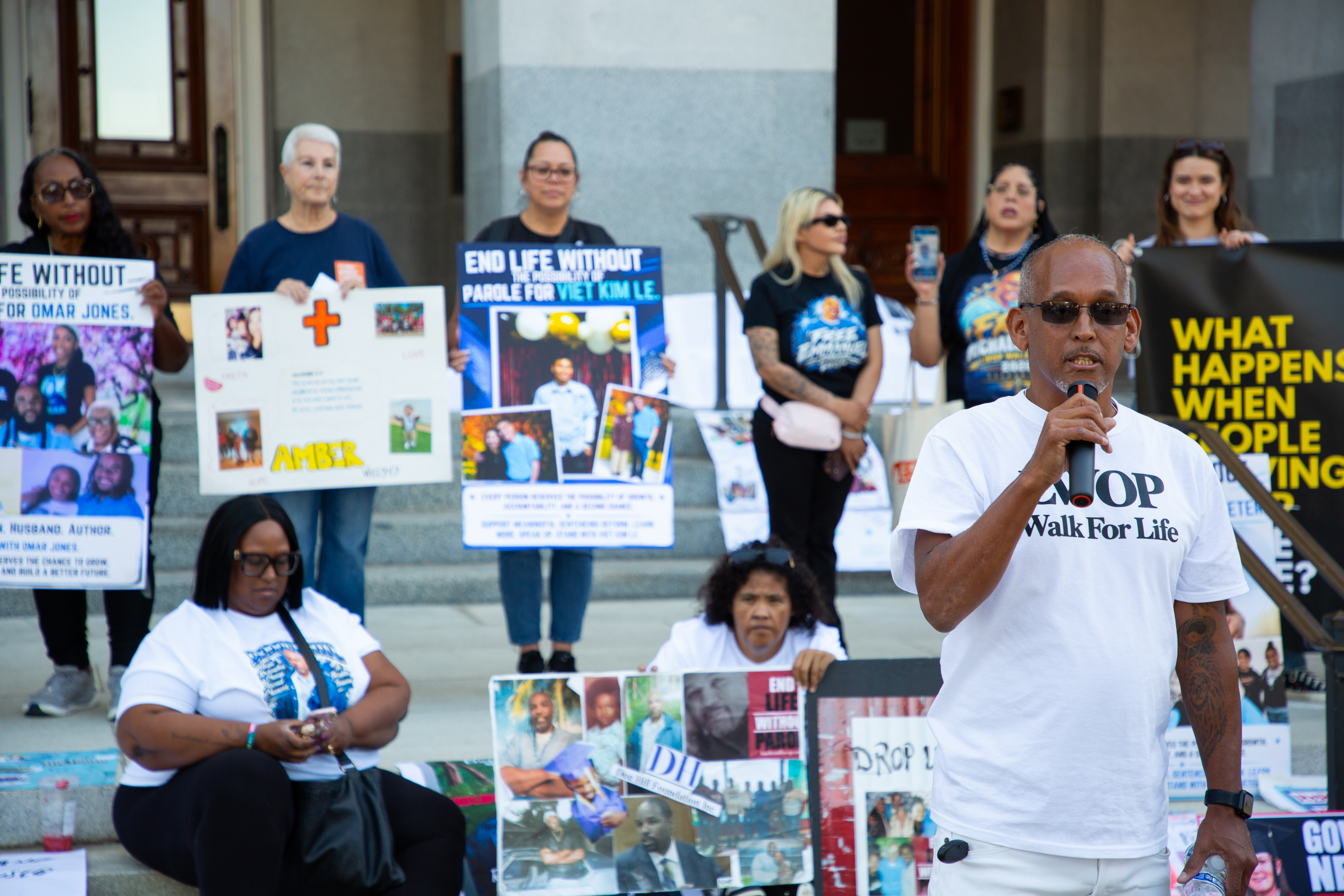
The 3rd Annual Walk-A-Thon to raise awareness about Life Without Parole (LWOP) convened at the State Capitol yesterday as part of a week of action uplifting hope, healing, and the call for change. From September 26 to October 3, over 30 prison yards throughout the state are participating in a Week of Walks to highlight the redemptive work people serving LWOP are doing inside prisons to heal themselves and the families and communities they may have harmed.
Over one hundred people gathered to bring attention to the thousands of incarcerated people involved in the statewide effort. Formerly incarcerated people, advocates, and families gathered at the Tower Bridge and walked to the State Capitol for a press conference and rally, holding art and signage and chanting “Drop LWOP” in between speeches and audio recordings from currently incarcerated people.
“These people who have been sentenced to die in prison are mentors of youth, facilitators of rehabilitation programs, and trusted clerks for prison staff,” said Joanne Scheer of Felony Murder Elimination Project, whose son is serving LWOP. “They bring calm to agitated prison yards and they do it through their own deep desire to learn to grow and to become the men and women they were meant to be.”
The week of walks was initiated and is led by incarcerated people serving LWOP sentences who hope to educate the public about extreme sentencing and the potential of rehabilitation. Their events are also raising thousands of dollars for a variety of organizations dedicated to helping communities throughout California. For example, women incarcerated at the California Institution for Women (CIW) raised $3,000 for a children’s hospital and restorative justice programs.
“Hope is powerful even when the system says ‘never.’ We choose to believe that change is possible. We believe in redemption. We believe people can grow and heal, and become better than the worst decision they ever made,” said Moneaya Hill, whose husband is serving LWOP. “We hold onto the hope that one day our loved ones will have the opportunity to come home. Not because we ignore the past but because we believe in transformation and second chances.”
Advocates hope these events will urge Governor Newsom to take more action during his final period in office and help educate the public about LWOP. While at the Capitol, they delivered a box filled with letters, art, and other materials from incarcerated people demonstrating their journeys of personal transformation and preparedness to come home. “We are asking Gavin Newsom to be the leader of today,” said Thanh Tran, a formerly incarcerated filmmaker and organizer. “We are asking him to be the leader that we need today. Not if you make it to the presidency, but now. We need clemency now.”
More than 5,000 people in California are serving LWOP, making it one of the largest LWOP populations in the country and world. 68% of people sentenced to LWOP in California are Black and Latinx; 62% of people sentenced in California were 25 years or younger at the time of the offense; and 71% of people sentenced to LWOP were convicted for the first-time. The United Nations has recommended that the United States halt the practice, calling these extreme sentences “death-by-incarceration” because “without the chance of parole, the rehabilitative function of the prison system is negated, reducing it to a tool of segregation and exploitation.”
“Our hope today is to be seen by each other but also by elected officials,” said Kelly Savage-Rodriguez of the California Coalition for Women Prisoners, who spent 23 years incarcerated on LWOP. “I learned how to do advocacy while inside prison because I was determined to change this other walking death sentence. We need sentencing reform, second chances, and pathways home. When people serving LWOP come back to the community, they become leaders; they bring wisdom, healing, and stability.”

This event is co-sponsored by the Drop LWOP Coalition, Californians United for a Responsible Budget, ASAP (Anti-Violence, Safety & Accountability Project), Felony Murder Elimination Project, Families United to End LWOP, and the California Coalition for Women Prisoners.
Share this:

Discover more from Central Valley Voice
Subscribe to get the latest posts sent to your email.

